Make choosing a product, paying and ordering straightforward. We connect your catalog, payments and shipping on Shopify or Next.js. Your proposal sets the scope, price and timeline.
moravamodern.com · the site of CAD ART, our family practice
Or message us now:
Jovan and Branko
Our family architecture practice's site, projektikuce.rs, built and ranked by us: 58,000+ visitors in 12 months, 78% from Google, €0 spent on ads.Source: Vercel Web Analytics · projektikuce.rs · 09/2025–09/2026
Projects
Pages we've built.
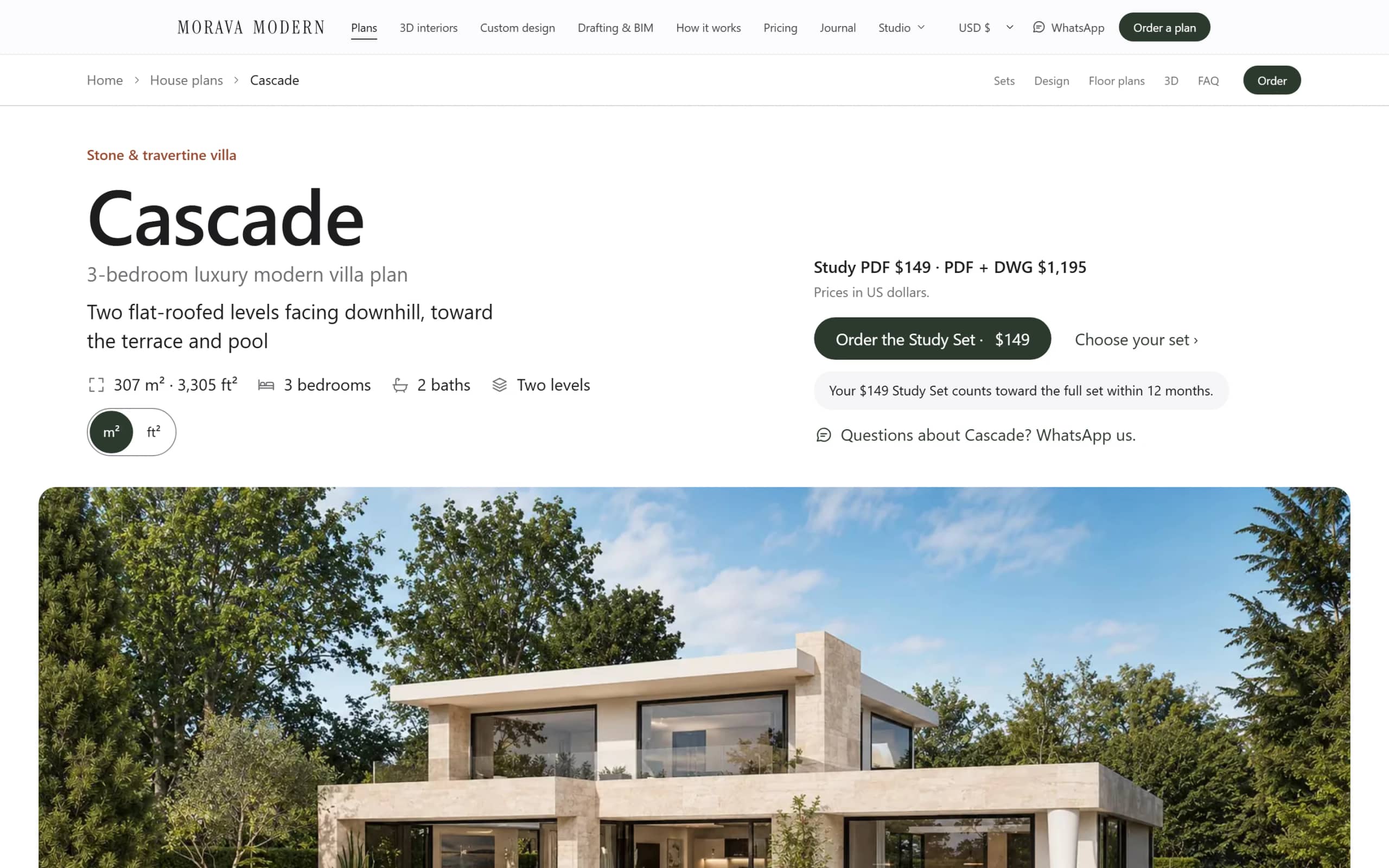
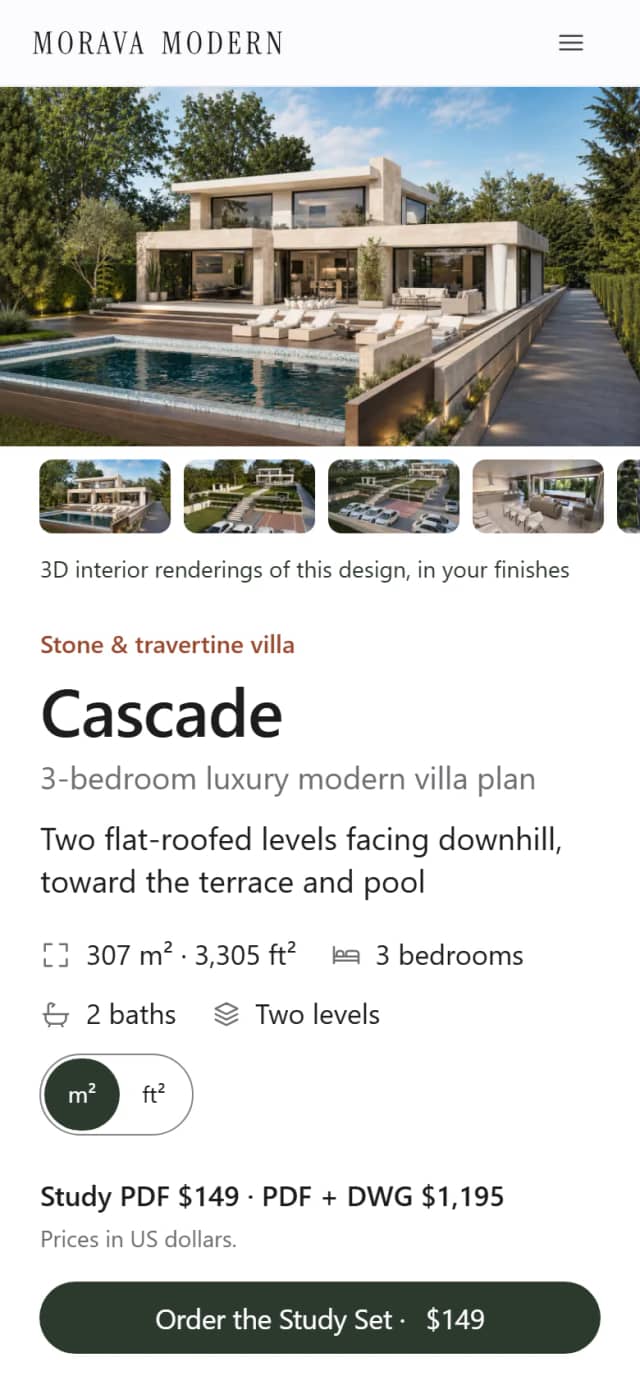
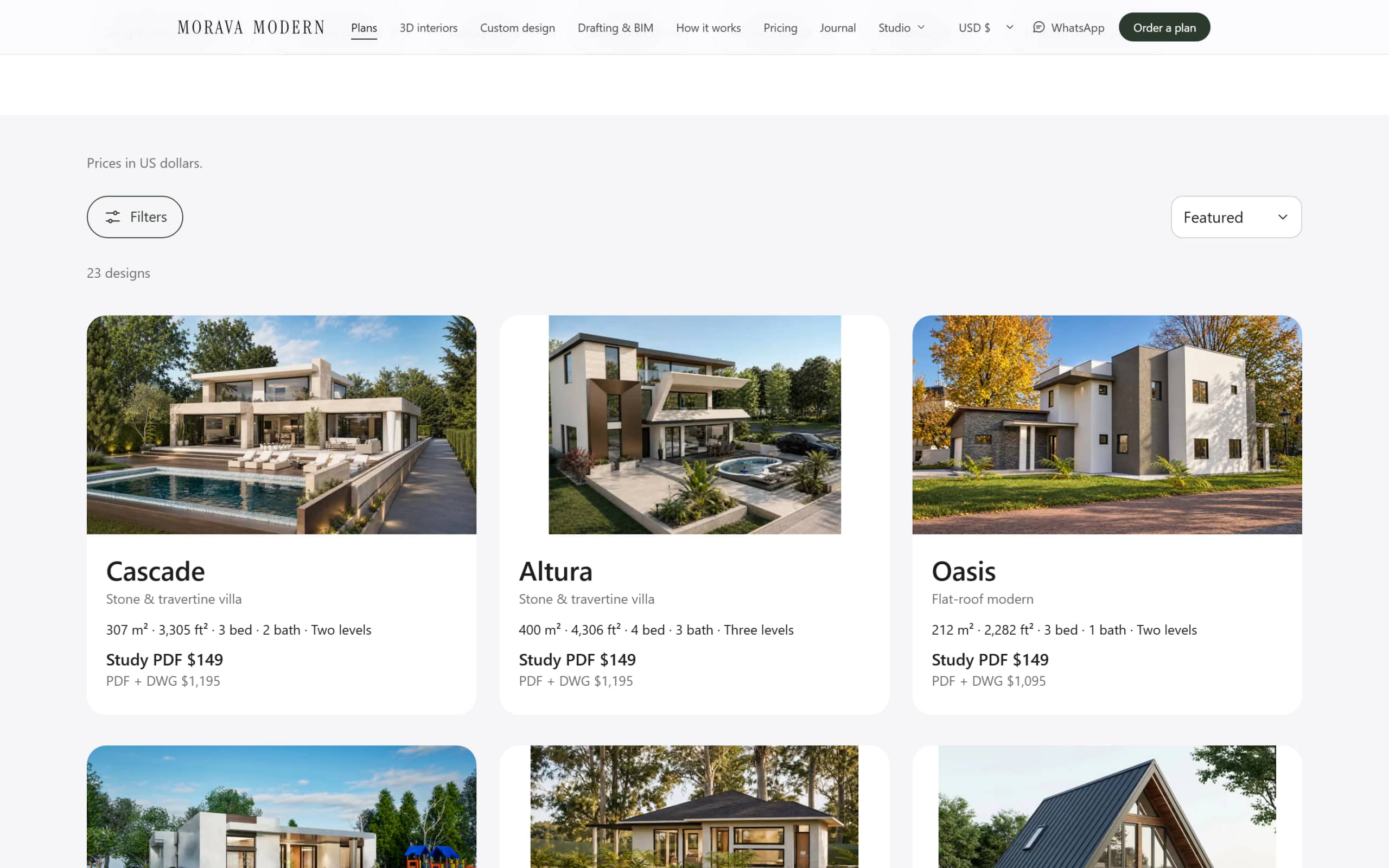
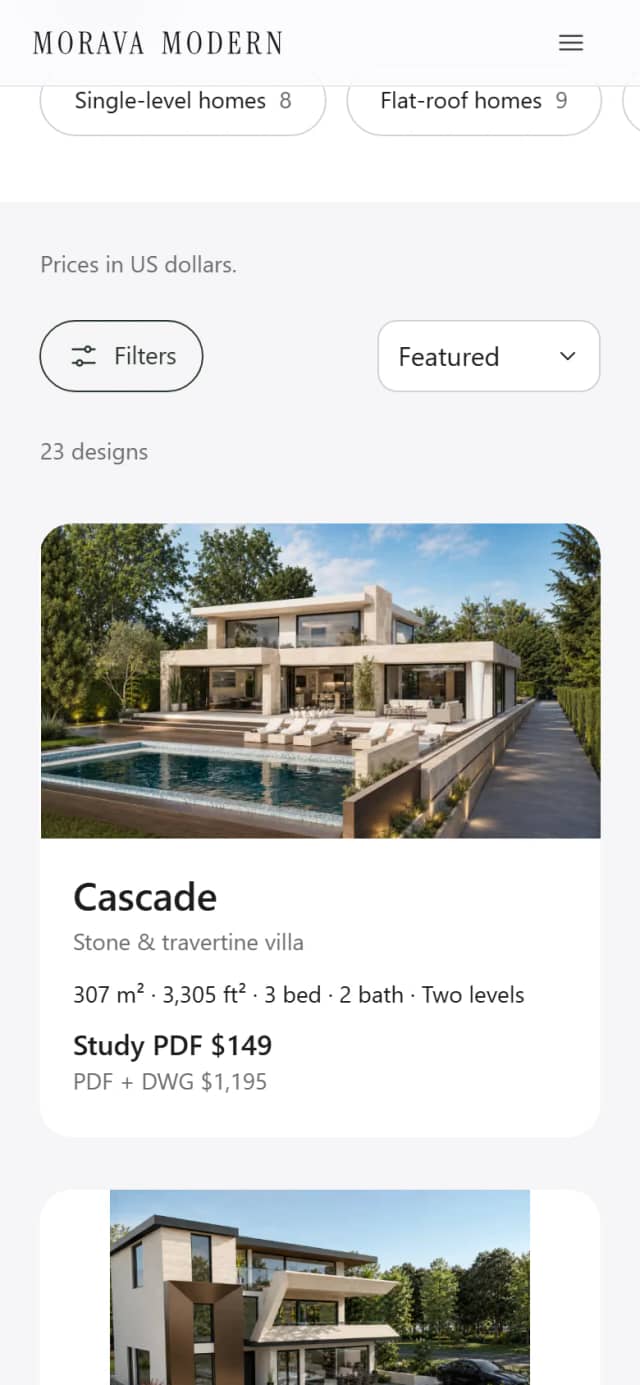
Real pages from four live websites, on desktop and phone. Morava Modern and projektikuce.rs belong to CAD ART, our family architecture practice.
A store earns its keep in three places: the product page, the checkout and the data you keep afterward.
Speed
Product pages optimized for speed
A store we code in Next.js is handed over with Lighthouse mobile Performance 95+, written into the contract: if the score is lower, we fix it for free. On a Shopify theme we optimize home, category and product pages the same way: the first product photo loads right away, and the rest only when the shopper reaches them. We don't guarantee the score there, because Shopify and its apps load part of the code. On a headless Next.js storefront, the guarantee covers the storefront.
Sales
A simpler path to a finished purchase
Cards, Apple Pay and Google Pay, shipping costs shown before the last step, and guest checkout, so nobody has to invent a password to pay you.
Ownership
Your store, your data
The store runs on your own Shopify or Stripe account, the domain is in your name, and product and customer data stay with you.
From click to doorstep
The whole order, connected.
An online store is a chain. We connect every link, so an order moves from product page to delivery without anyone copying data by hand.
01
Product
Variants and stock
Product schema
view_item event
02
Cart
Shipping estimate
Discount codes
add_to_cart event
03
Checkout
Guest checkout
Taxes by market
begin_checkout event
04
Payment
Stripe
Shopify Payments
Apple Pay
Google Pay
05
Fulfillment
Order emails
Carrier rates
Tracking links
Payment methods depend on the country your business is registered in. We confirm what's available before we quote.
Payments, taxes, currencies
The money side, handled.
For most stores the payment question is simple: Shopify Payments if you sell on Shopify and it's available in your country, Stripe if you go headless. Both take the major cards, Apple Pay and Google Pay, and both can add local methods in the markets that use them.
Read more
Taxes are configured, not guessed. We set up tax collection for the markets you sell to, including EU VAT under the One-Stop Shop scheme and US sales tax in the states where you're registered. We don't give tax advice; your accountant confirms the rules and the store applies them.
Selling across borders? A multi-market store handles several currencies and languages with prices set per market, so each country sees a rounded local price instead of a raw conversion. Each market gets its own URLs and hreflang, which our SEO work builds on.
Shipping is part of the checkout, not an afterthought: carrier-calculated or flat rates, free-shipping thresholds and local pickup, all visible before the customer reaches the payment step.
Only need a business site for now? Start with custom website design and add the store when you're ready.
What's included
Everything a store needs to launch.
This is the base of every store we build. A headless storefront, several currencies and languages or custom checkout flows come in when the business needs them, and the proposal states the exact scope.
Store design: home, category, product, cart and checkout
A customized Shopify theme or a custom Next.js storefront
Products entered or migrated from your current store, as scoped in the proposal
Shopify Payments or Stripe, with Apple Pay and Google Pay
Shipping zones, rates and tax settings
Filters and search that work on a phone
Product, offer and breadcrumb schema
GA4 e-commerce events from product view to purchase
Order and shipping emails in your brand
Templates for terms, returns and privacy pages
Training on products, orders and discounts
30-day bug-fix warranty after launch
Platform
Shopify or headless ecommerce?
We choose the platform for your payment provider, catalog, integrations and the people who will run the store, not out of habit. The proposal recommends one and explains why.
A
Option A
Shopify
A proven admin, hosted checkout and a large app ecosystem, with a theme we customize to your brand.
Read more
Choose it when
You want to launch quickly and run everything from one admin
Shopify Payments is available in your country
Your catalog fits a theme with custom sections
Trade-off
Themes limit layout and speed, and monthly app fees add up as you grow.
B
Option B
Headless Next.js
A custom Next.js storefront on Shopify or Medusa. The same products and orders, with full control over speed and design.
Read more
Choose it when
Speed and organic search are your main growth channels
You sell in several languages and currencies
You need custom checkout flows, B2B prices or ERP sync
Trade-off
A bigger build up front, and bigger changes need a developer or agreed maintenance.
Process
Four steps to your store's launch.
Payments and shipping get tested with real orders before a single customer sees the store.
01
Brief
We map your catalog, payment provider, carriers and markets before we quote. Then you get a proposal with the scope, price and timeline.
Proposal
02
Design
Category, product, cart and checkout are designed in Figma around your real products, not placeholders.
Revision rounds set in the proposal
03
Build
Products are imported, payments run in test mode, and shipping and taxes are configured. You place test orders on a private preview.
Test orders before launch
04
Launch & care
We switch payments to live, redirect old product URLs, submit the sitemap and train your team on orders and discounts.
30-day bug-fix warranty
Product SEO
Products Google can read.
Rich results need clean product data. Every product page ships with Product and Offer markup: price, currency, availability, brand and SKU, plus shipping and return details when you have them.
Example markup. On your store, every value comes from the catalog.
Read more
Unique titles and descriptions for every product and category
Canonical URLs for variants and filtered pages, so filters don't create duplicate content
Category pages written for search, not just product grids
Correctly sized AVIF and WebP images with descriptive alt text
Project
Selling plans online.
Morava Modern is the house-plan store of CAD ART, our family's architecture practice: a filtered catalog, several packages per plan, and an order flow that turns a choice into an invoice.
Morava Modern and projektikuce.rs belong to CAD ART, our family's architecture practice. On Morava Modern, a buyer abroad chooses a house plan and sends an order request. We built both, so we know what a product page has to answer before anyone orders.
Read more
Over the 12 months to September 2026, projektikuce.rs had 58,000+ visitors, and 72% of visits came from a phone. That's why we design product pages and the checkout for the phone first, then scale up to desktop.
Jovan & Branko MilivojevićArchitects · founders of Kvant Studio
Projektikuce.rs, our family practice's site, measured
visitors in 12 months
58,000+
of visits on a phone
72%
visitors from Google
46,000+
€0ad spend
100% organic. No Google Ads, no sponsored posts since launch. About 78% of visitors came straight from Google.
Source: Vercel Web Analytics · projektikuce.rs · 09/2025–09/2026
How we price
A clear scope. A written quote.
After a short exchange you get a proposal with the exact scope, price and timeline, before we start. Third-party costs, such as your Shopify plan and payment processing fees, are listed separately.
Catalog size, variants and who enters the products
Platform: Shopify or a headless Next.js storefront
Payment providers and the markets you sell to
Shipping zones, carriers and taxes
Integrations such as ERP, inventory or a newsletter
Languages, currencies and migration from your current store
How quotes work
1You send a few sentences about your business and what you need.
2We clarify the details, in writing or on a short call.
3You get a proposal with the exact scope, price and timeline.
What we guarantee in the contract
Lighthouse mobile Performance 95+ at handover for everything we code in Next.js, or we fix it for free.
The launch date is in the contract, and so is how much less you pay if the delay is on us.
For 30 days after launch we fix bugs for free.
You approve the design. Your proposal sets the number of revision rounds; extra changes and their price are agreed in writing first.
The total in your proposal covers the whole agreed scope.
The domain is registered in your name from day one. After the final payment, the code, design files and content belong to you. You choose who you work with next.
The Kvant Partner approach
A store is more than a checkout.
Payments, shipping, tracking and what happens after the sale decide whether a store makes money. We set them up, run test orders before launch, and tell you which extras are worth it and which aren't. Every connection is listed in the proposal, with its price, before you sign.
Shopify Payments or Stripe, with Apple Pay and Google Pay. We help with the provider's onboarding and run test payments before launch.
Shipping and tracking
Carrier or flat rates at checkout, and a tracking link in the shipping email, so customers don't have to ask where their order is.
GA4 e-commerce
Every step from product view to purchase, so you can see where buyers drop off and which products sell.
Search Console and product data
Product schema and a sitemap that update with your catalog, and Search Console to flag errors early.
WhatsApp and Viber
For the questions about size, stock or delivery that stand between a visitor and an order.
Newsletter for repeat buyers
People who bought once hear about new products and offers, through a newsletter tool connected to your store.
FAQ
E-commerce questions.
How much does an ecommerce website cost?
The price follows the scope of your store: catalog size, platform, payment providers, markets and integrations. After a short exchange you get a proposal with the exact scope, price and timeline, before we start. Third-party costs are listed separately in the proposal, including your Shopify plan, payment processing fees and any paid apps.
Shopify or a custom headless store?
Start with Shopify if you want a proven admin and a fast launch. Go headless when speed, content and multilingual SEO drive your sales, or when a theme can't do what your checkout needs. The proposal names one and explains why.
Can you build a headless Shopify store?
Yes. We build headless Next.js storefronts on Shopify or Medusa, with multi-currency, multilingual pages and custom checkout flows. The proposal spells out what your storefront includes; here is how quotes work.
Which payment methods can I accept?
With Shopify Payments or Stripe you can take cards, Apple Pay and Google Pay, plus local methods such as iDEAL or SEPA Direct Debit where they are supported. Availability depends on where your business is registered, so we check it before we quote.
Can you migrate my store from WooCommerce or another platform?
Yes. Product migration is part of the build, and the proposal states how many products move. Old product and category URLs get 301 redirects to the new ones, so search engines and existing links find the new pages. Moving customers and order history depends on the source platform, and we scope it in the proposal.
How do you handle VAT and sales tax?
We configure tax collection in Shopify or with Stripe Tax for the markets you sell to, such as EU VAT under the One-Stop Shop scheme or US sales tax where you're registered. Your accountant confirms the rules, and the store applies them to every order.
How long does it take to build an ecommerce website?
An online store usually takes 5 to 12 weeks, depending on the catalog, payments and integrations. The exact timeline is in the proposal, and the launch date goes into the contract. After launch you add products, run discounts and ship orders in the admin yourself. For new features and monitoring, we offer maintenance scoped to your store.
Two neighboring markets, two rulebooks: card gateways, cash on delivery, couriers, VAT, fiscal receipts and consumer law in Serbia and Croatia, side by side, for brands entering the region.
Ready to sell online?
Send us a link to your current store or a short description of your catalog. We will help you work out what you need and suggest a next step.